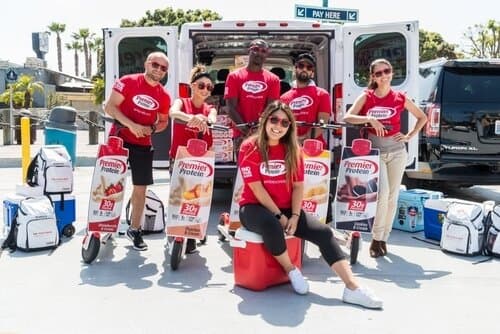
Measuring ROI on brand activations requires establishing measurement infrastructure before the campaign launches, collecting real-time engagement data during the activation, and conducting post-event attribution analysis to connect activation exposure to downstream business outcomes. Brands that build measurement into campaign design from the beginning, not as an afterthought, consistently demonstrate higher activation ROI and make better optimization decisions.
Why Brand Activation ROI Is Hard to Measure
Unlike digital advertising, which generates click-through and conversion data automatically, live brand activations create offline consumer interactions that are harder to track. The consumer who tries your product at a sampling event in Los Angeles or Chicago may not purchase for two weeks. And when they do, nothing automatically connects that purchase to your activation.
This measurement gap leads many brands to treat activation ROI as unmeasurable, settling for vanity metrics like "impressions" and "samples distributed" without connecting the investment to business outcomes. That's a solvable problem with the right measurement infrastructure.
Step 1: Define KPIs Before the Campaign
Every brand activation should have one primary KPI and two to three secondary metrics defined before the campaign launches. Common primary KPIs by campaign objective:
- Trial generation: Cost per trial (total investment divided by verified samples accepted)
- Lead generation: Cost per qualified lead
- Awareness lift: Aided brand awareness increase vs. control market measured via consumer survey
- Purchase intent lift: Purchase intent score increase vs. pre-event baseline
- Sales attribution: Revenue directly traceable to activation through unique codes or digital attribution
Choose the KPI that maps to your campaign's primary business objective. Everything else is secondary.
Step 2: Build Real-Time Data Collection
At the activation level, staff need tools and processes to collect data on every consumer interaction, including digital lead capture forms on tablets or mobile devices, accurate sample tracking by hour and location, unique promo codes or QR codes assigned to each activation, brief consumer surveys to capture sentiment and intent data, and social media monitoring to track hashtags and location tags in real time.
Air Fresh Marketing's event staffing teams are trained to collect this data consistently and accurately, providing clients with reliable activation-level analytics.
Step 3: Configure Attribution Infrastructure
For activations aimed at driving purchase, configure attribution before the event. Unique promo codes give each event a specific discount code to track redemption volume in your e-commerce platform post-event. QR codes linking to dedicated landing pages make each event's web traffic attributable. Email and CRM tracking allows you to upload post-event lead lists with an event source tag and track conversion rate over the following 30, 60, and 90 days. For campaigns without direct transaction attribution, consumer panel methodology can compare purchase behavior of event-exposed consumers vs. a matched control group.
Step 4: Conduct Post-Event Analysis
Within 72 hours of the activation, compile total interactions vs. target, cost per interaction by activation type, lead capture volume and quality, social media content volume and reach, and promo code or QR code engagement rate.
Within 30 days: promo code redemption rate, email campaign performance for post-event leads, and CRM pipeline movement for B2B leads.
At 90 days: full sales attribution analysis, consumer panel results if applicable, and activation ROI calculation (revenue attributed to activation divided by total activation investment).
Benchmarking Your Results
Industry benchmarks for experiential marketing ROI vary widely by category, campaign type, and measurement methodology. Well-designed sampling campaigns in CPG categories typically generate $3-$8 in incremental retail sales per dollar invested in the activation, with branded activations at sponsorship events generating awareness lift of 15-30 percentage points among exposed consumers.
Air Fresh Marketing provides clients with measurement frameworks, reporting tools, and analytical support for experiential campaigns nationwide. Contact us to build a measurement-first activation program, or get a quote to discuss your next campaign.