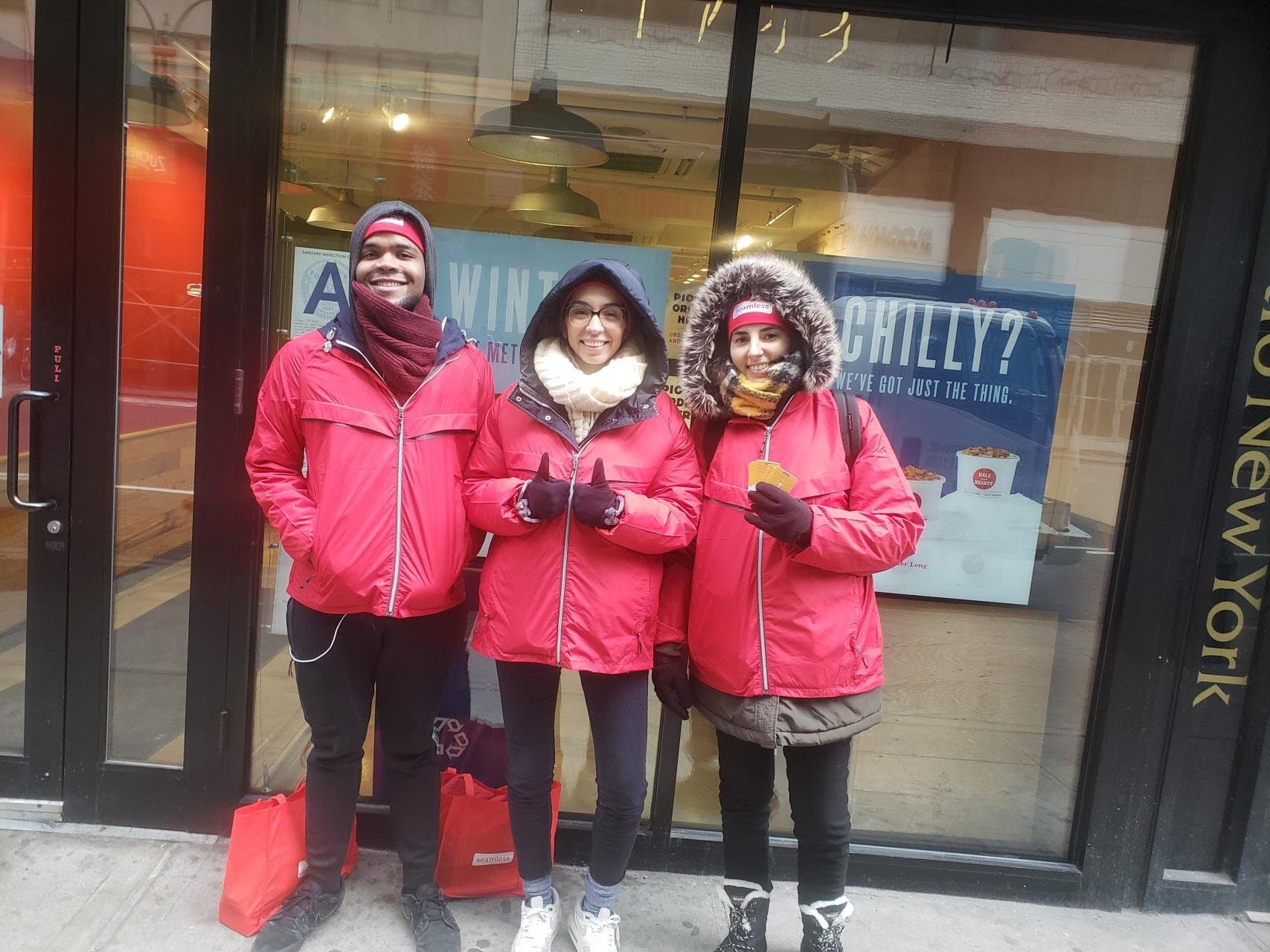
Multi-city brand activation is the ultimate test of an experiential marketing program. When your campaign works in one market, it proves the concept. When it works consistently across 10, 20, or 50 markets, it proves the system. And systems, not one-off successes, are what build brands at scale.
Scaling experiential campaigns nationwide introduces challenges that single-market programs never face: logistical complexity, staffing consistency, cultural adaptation, and unified measurement across diverse markets. This guide covers exactly how to overcome each challenge and execute multi-city activations that deliver consistent results from New York to Los Angeles and every market in between.
Why Brands Are Going Multi-City
The shift toward multi-city experiential marketing reflects several converging forces:
National Consumer Expectations
Consumers in secondary and tertiary markets expect the same brand experiences as those in major metros. A brand that activates only in New York and LA is invisible to consumers in Denver, Atlanta, Phoenix, and dozens of other high-potential markets.
Digital Amplification
Multi-city activations generate exponentially more social content than single-market events. When your brand is simultaneously creating experiences in 15 cities, the organic social media footprint creates national visibility that a single-market activation cannot match.
Competitive Pressure
Your competitors are going multi-city. Brands that limit experiential marketing to one or two markets cede ground in every other market where competitors are building relationships through face-to-face engagement.
Retailer Demand
Retail partners increasingly expect marketing support across their entire footprint, not just in priority markets. Multi-city sampling, demo, and promotional programs support sell-through across your distribution network.
The Multi-City Activation Framework
Successful multi-city programs follow a consistent framework regardless of scale:
Phase 1: Strategic Market Selection
Not all markets deserve equal investment. Prioritize based on:
Sales potential: Markets where your product has the highest growth opportunity. This often means markets where distribution is new or where competitor dominance can be challenged.
Demographic alignment: Markets with the highest concentration of your target consumer. Census data, syndicated research, and first-party customer data inform this analysis.
Retailer presence: Markets where your key retail partners need marketing support. Coordinate with your sales team to align experiential activations with retail initiatives.
Competitive landscape: Markets where competitor experiential activity is low and you can establish first-mover advantage.
Event calendar: Markets with major events, festivals, or seasonal opportunities that amplify your activation reach.
Phase 2: Centralized Planning, Localized Execution
The key to multi-city consistency is centralized strategy with localized adaptation:
Centralize: Brand guidelines, training content, messaging frameworks, data collection protocols, reporting templates, and quality standards.
Localize: Venue selection, staff recruitment, timing, cultural nuances, local partnerships, and market-specific messaging adaptations.
A national experiential marketing agency like Air Fresh Marketing manages this balance by maintaining central brand standards while empowering local market teams to adapt execution for their specific communities.
Phase 3: Staffing Infrastructure
Staffing is the make-or-break factor in multi-city programs. Your options:
Option A: One national agency (recommended). A single agency with deep talent pools in all target markets provides consistent quality, unified reporting, and simplified management. This is the approach that scales most effectively.
Option B: Regional agency network. Multiple regional agencies coordinated by your internal team. This can work for small programs but creates complexity and inconsistency at scale.
Option C: Internal team with local support. Your team travels to manage each market with locally recruited support staff. This approach does not scale beyond 3-5 markets without significant headcount investment.
Phase 4: Logistics and Operations
Multi-city logistics require military-grade planning:
Materials and inventory: Centralized fulfillment with regional distribution hubs. Ship materials 5-7 business days before each activation with tracking and confirmation protocols.
Equipment and displays: Standardized equipment packages that can be assembled consistently in any market. Include setup instructions and backup components.
Permits and compliance: Every market has different permit requirements, noise ordinances, and sampling regulations. Your agency should handle local compliance in each market.
Communication infrastructure: Real-time communication channels connecting all markets to central command. This enables live problem-solving and cross-market coordination.
Phase 5: Unified Measurement and Reporting
The value of multi-city programs lies in comparative data that optimizes future campaigns:
Standardized metrics: Every market must measure the same KPIs using the same methodology. Without standardization, cross-market comparison is meaningless.
Real-time dashboards: Live performance data from all markets on a single dashboard. This enables real-time resource reallocation and mid-campaign optimization.
Market-level analysis: Performance segmentation by market, staff team, venue, day of week, and time of day. This granular data reveals optimization opportunities invisible in aggregate numbers.
Portfolio reporting: Consolidated campaign reports that demonstrate total program ROI alongside market-specific insights. This is the data that justifies continued investment and informs budget allocation.
Staffing Consistency Across Markets
The biggest challenge in multi-city programs is maintaining consistent brand representation when different people staff each market.
Centralized Training Programs
Develop comprehensive training materials that can be delivered consistently across all markets:
- Video-based brand training that every staff member completes before deployment
- Live virtual training sessions with brand team participation
- Market-specific supplements that address local nuances
- Knowledge assessments that verify comprehension before activation
Staff Selection Standards
Maintain consistent selection criteria across all markets:
- Minimum experience requirements
- Brand fit evaluation
- Background check standards
- Performance history from previous campaigns
Quality Assurance Protocols
Verify consistency through systematic quality checks:
- Mystery shopper evaluations in each market
- Photo and video verification from every activation
- Consumer feedback collection with standardized survey instruments
- Staff performance scoring by team leads
At Air Fresh Marketing, our quality assurance program ensures that the brand ambassador experience in Houston is indistinguishable from the experience in Boston.
Mobile Marketing Tours
Mobile marketing tours are a specialized form of multi-city activation where a branded vehicle or experience travels between markets on a planned route.
Tour Advantages
- Branded vehicle presence creates additional impressions between activation stops
- Dedicated tour team builds expertise over the tour duration
- Sequential market activation builds momentum and social buzz
- Content continuity creates a compelling narrative across the entire tour
Tour Logistics
Mobile tours add transportation, vehicle maintenance, and routing logistics to the standard multi-city planning framework. Work with an agency that has tour-specific experience to avoid common pitfalls like unrealistic driving schedules, vehicle breakdown contingencies, and venue access issues for large branded vehicles.
Tour Staffing Models
Traveling team: A core team travels the entire tour route. Best for consistency but creates fatigue on long tours.
Hybrid model: Core team leads travel the route while local brand ambassadors supplement in each market. This balances consistency with fresh energy.
Market-specific teams: Different teams staff each market stop. Best for cost efficiency on long tours but requires more intensive training to maintain consistency.
Budgeting for Multi-City Activations
Cost Structure
Multi-city programs have a different cost structure than single-market events:
- Fixed costs: Brand development, training creation, technology setup, campaign management. These amortize across all markets, making each additional market incrementally cheaper.
- Variable costs: Staff rates, materials, travel, venue fees, local permits. These scale with market count.
- Management overhead: Account management, quality assurance, reporting. Typically 15-20% of total variable costs.
Cost Optimization Strategies
Hub-and-spoke scheduling. Cluster nearby markets into weekly or bi-weekly tours to reduce travel costs. Activate Denver and Phoenix in the same week, not three weeks apart.
Volume negotiations. Multi-market commitments give you leverage to negotiate better rates with your agency, venues, and suppliers.
Tiered staffing. Not every market needs the same staffing level. Deploy larger teams in high-priority markets and leaner teams in secondary markets.
Shared resources. Use the same display equipment across markets by shipping between activation dates rather than purchasing duplicate sets.
Budget Allocation by Priority
For a 20-market program, a typical allocation:
- Tier 1 (5 markets, 40% of budget): Largest markets, highest staffing levels, premium venues
- Tier 2 (8 markets, 35% of budget): Strong markets with moderate staffing and standard venues
- Tier 3 (7 markets, 25% of budget): Emerging markets with lean staffing and efficient formats
Case Studies: Multi-City Activation Success
CPG National Sampling Tour
A major snack brand launched a new product with a 25-market sampling tour over 8 weeks. Air Fresh Marketing provided consistent staffing across all markets with centralized training and real-time reporting.
Results: 500,000+ samples distributed, 38% trial-to-purchase conversion, 22% sales velocity lift in activated markets vs control, and over 15,000 social media mentions organically generated.
Tech Product Launch
A SaaS company launched a new product with simultaneous activations in 12 markets targeting IT decision-makers at regional technology events.
Results: 3,200 qualified leads captured, 18% lead-to-meeting conversion, $2.4M in pipeline generated within 90 days, at a cost-per-qualified-lead 60% lower than digital-only campaigns.
Common Multi-City Mistakes
Mistake 1: Treating every market identically. National consistency does not mean ignoring local context. Adapt timing, venue selection, and cultural references for each market while maintaining brand standards.
Mistake 2: Insufficient lead time. Multi-city programs require 8-12 weeks of planning. Compressed timelines force compromises in staff quality, venue selection, and training.
Mistake 3: Fragmented agency relationships. Using different agencies in different markets creates inconsistency, duplicated management effort, and incompatible data. One national partner is almost always the better choice.
Mistake 4: Ignoring travel logistics. Materials lost in shipping, equipment delayed at venues, and staff travel complications derail activations. Build buffer time into every logistical plan.
Mistake 5: Weak measurement infrastructure. Without standardized measurement across all markets, you cannot compare performance or optimize allocation. Invest in unified reporting from day one.
Scale Your Brand Nationwide with Air Fresh Marketing
Air Fresh Marketing activates experiential campaigns in 200+ cities across the United States. Our national infrastructure includes:
- Vetted talent pools in every major market with consistent training and quality standards
- Centralized campaign management with dedicated account teams
- Proprietary technology for real-time reporting across all markets
- Logistics expertise from hundreds of multi-city campaigns
- professional 1099 contractor model ensuring reliable, high-quality staff everywhere
Whether you are planning a 5-market product launch or a 50-market national tour, we build programs that scale without sacrificing quality.
Explore our mobile marketing tours, event marketing services, and brand activation capabilities. Review our work in specific markets like Chicago, Miami, Las Vegas, and Dallas.
Contact us for a multi-city activation proposal and discover how Air Fresh Marketing turns regional success into national impact.