Sampling program management is the discipline of planning, executing, and measuring product sampling campaigns that convert trial into purchase. For CPG, food and beverage, beauty, and wellness brands, sampling remains the single most effective way to drive product trial, but only when the program is managed with the same rigor you apply to your digital marketing campaigns.
A well-managed sampling program delivers trial-to-purchase conversion rates of 15-35%, depending on product category and distribution channel. A poorly managed one wastes product, burns budget, and produces data so unreliable it cannot inform future decisions.
Here is the end-to-end framework for sampling program management that we use at Air Fresh Marketing for clients ranging from startup brands to Fortune 100 CPG companies.
Phase 1: Strategy and Planning
Define Your Sampling Objectives
Every sampling program should start with clear, measurable objectives:
- Trial generation: Target number of samples distributed to qualified consumers
- Purchase conversion: Target percentage of samplers who purchase within 30/60/90 days
- Data capture: Target number of consumer profiles collected for retargeting
- Awareness and reach: Target impressions and social sharing metrics
- Retail velocity lift: Target percentage increase in units sold at sampling locations
Identify Your Target Consumer
Not every sample needs to reach every person. Define the consumer profile most likely to convert from trial to purchase:
- Demographic parameters (age, gender, household size, income)
- Behavioral indicators (category purchaser, brand switcher, new category entrant)
- Geographic targeting (proximity to retail distribution, market priority)
- Psychographic alignment (health-conscious, value-driven, premium-seeking)
Select Distribution Channels
Match your distribution channel to your target consumer and brand positioning:
- In-store sampling: grocery, club, natural, convenience, specialty retail
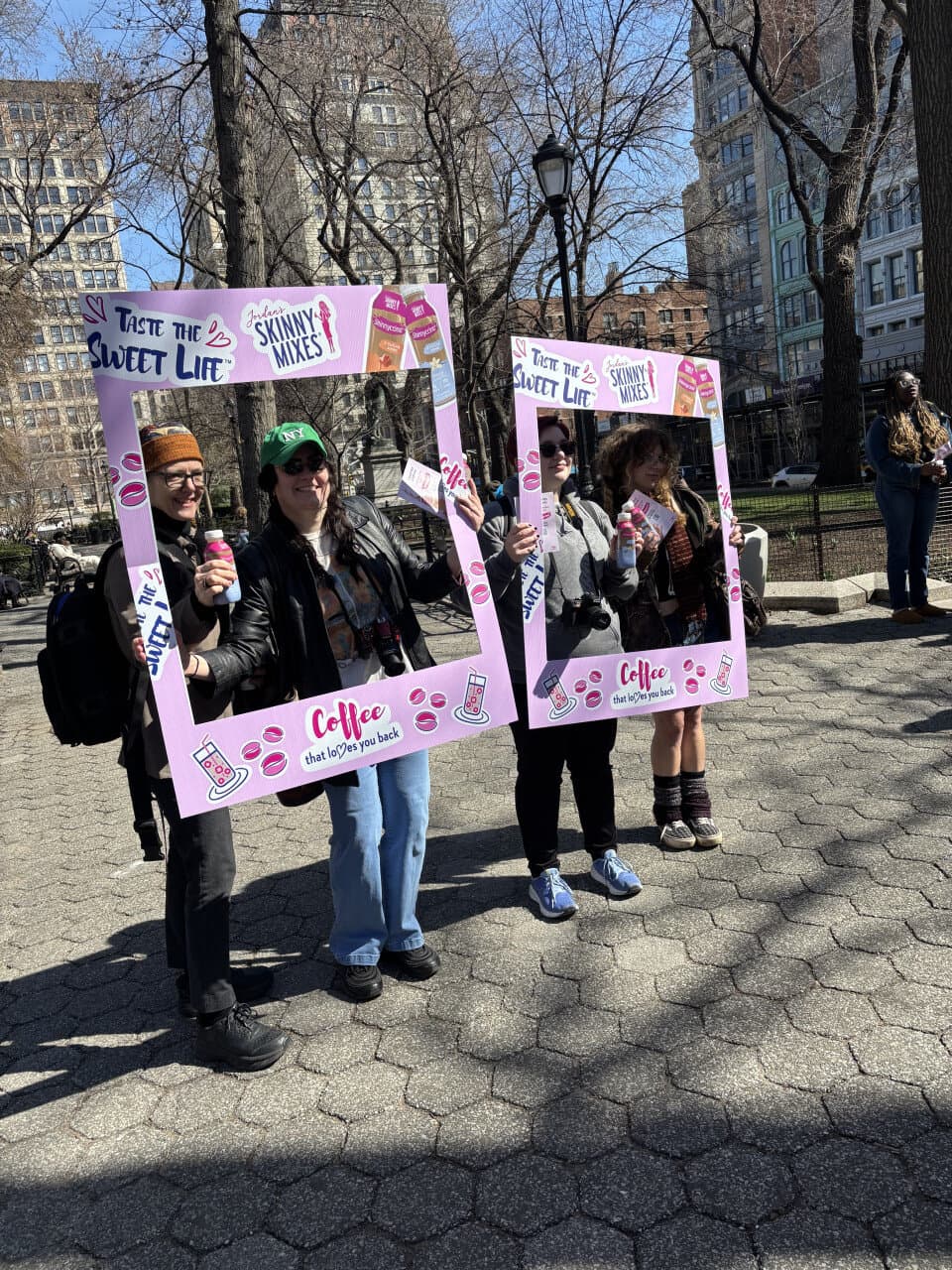
- Event sampling: festivals, concerts, sporting events, cultural events
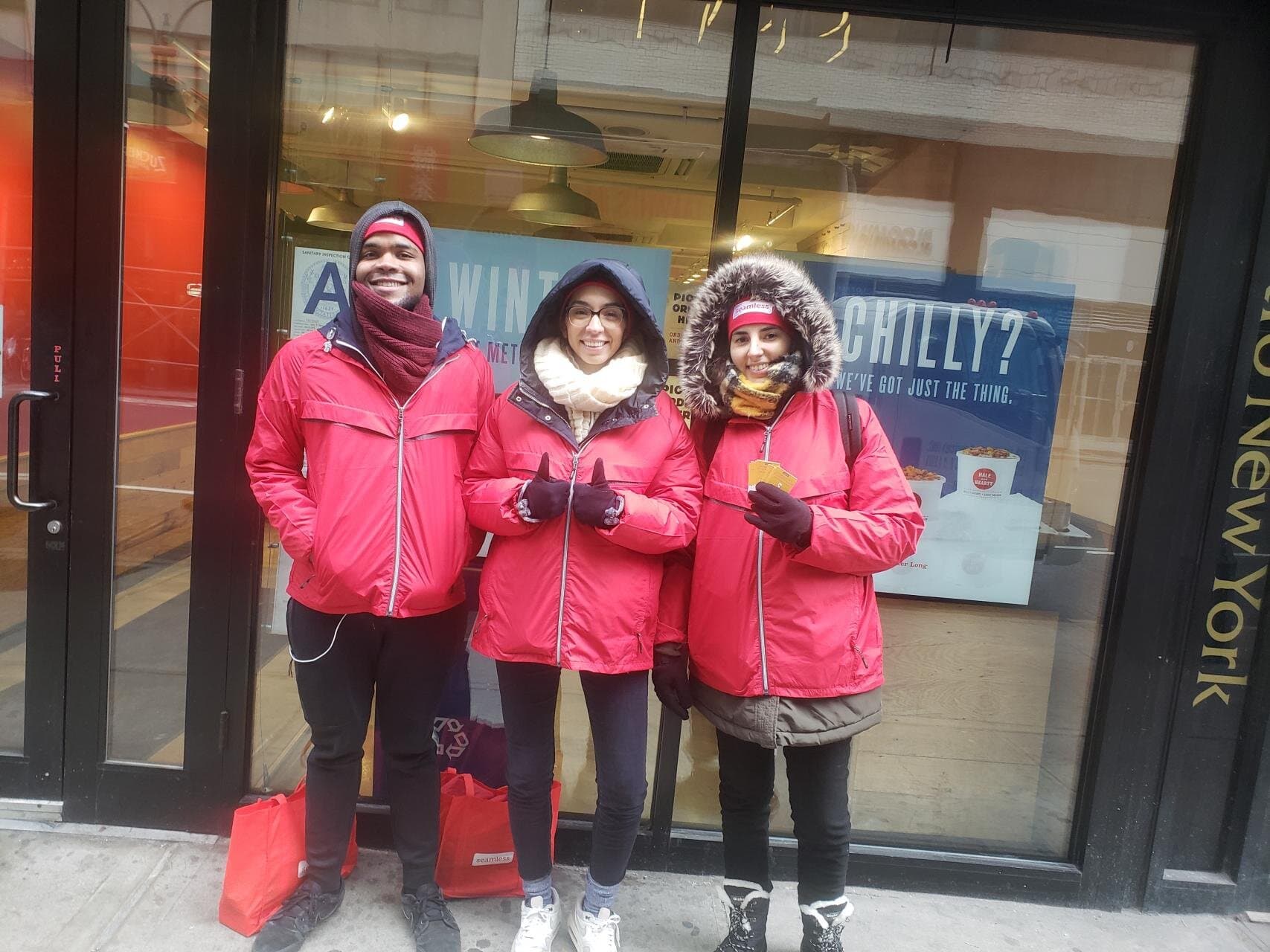
- Street team distribution: transit hubs, business districts, campuses
- Direct-to-consumer: subscription boxes, e-commerce insert, direct mail
- Venue partnerships: gyms, spas, hotels, co-working spaces
Each channel has different staffing requirements, compliance considerations, and cost structures. Our product sampling services cover all major distribution channels.
Plan Budget and Timeline
Sampling program budgets include:
- Product cost: cost of samples (often the largest line item)
- Staffing cost: brand ambassador wages, training, management
- Logistics: sample shipping, storage, and distribution to activation sites
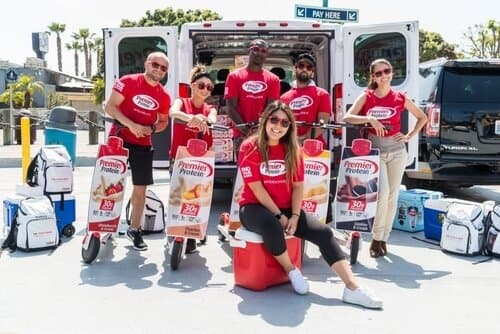
- Materials: coolers, display units, branded collateral, technology
- Permitting: event fees, store demo fees, street team permits
- Measurement: tracking technology, coupon printing, data analysis
Plan 6-12 weeks lead time for a multi-market sampling program. Single-market programs can launch in 3-4 weeks with experienced agency support.
Phase 2: Logistics and Preparation
Sample Production and Quality Control
Work with your manufacturing team to produce sample-sized units that accurately represent the full product experience. Common formats include:
- Single-serve portions for food and beverage
- Sachet or trial-size for beauty and personal care
- Miniature packaging for household products
- Full-size products for high-value items with long purchase cycles
Quality control is critical: a poor sample experience creates negative brand association that is harder to overcome than no trial at all.
Storage and Distribution
Establish storage facilities and distribution logistics to get samples to the right location at the right time, in the right condition. Temperature-sensitive products require cold chain management. Fragile products need protective packaging. High-value products need inventory security.
Staff Recruitment and Training
Partner with your event staffing agency to recruit and train sampling staff well in advance of program launch. Training should cover:
- Product knowledge (ingredients, benefits, usage, competitive advantages)
- Sampling technique (approach, engagement, sample delivery, purchase prompt)
- Allergen and safety information
- Food handler certification (for food and beverage products)
- Data capture procedures and technology
- Brand messaging and talking points
- Compliance requirements (portion size, frequency limits, age verification)
Technology Setup
Configure your data capture and tracking systems before the first sample is distributed:
- Tablet-based or app-based interaction logging
- QR codes linking to product pages with UTM tracking
- Coupon codes unique to each sampling location and date
- POS integration for retail velocity tracking
- Social media monitoring for branded hashtags and UGC
Phase 3: Execution and On-Site Management
Daily Operations Protocol
Each sampling day follows a structured protocol:
- Setup (30-60 min before start): Station assembly, product staging, technology check
- Team briefing (15 min): Daily goals, script reminders, logistics updates
- Active sampling (4-8 hours): Consumer engagement, sample distribution, data capture
- Mid-shift check (15 min): Progress against goals, energy management, supply check
- Breakdown (30 min): Station cleanup, inventory count, equipment storage
- End-of-day report (15 min): Metrics compilation, notable observations, next-day adjustments
Quality Assurance
Team leads should monitor staff performance throughout each shift:
- Are staff engaging consumers properly (not just handing out samples passively)?
- Is the sampling station clean, organized, and brand-compliant?
- Are data capture and lead collection happening consistently?
- Is product being wasted or distributed to non-target consumers?
- Are food safety and compliance protocols being followed?
Real-Time Optimization
Use daily data to optimize the program in real time:
- Shift staff to higher-traffic locations or time slots
- Adjust engagement scripts based on consumer response
- Increase or decrease sample allocation by location
- Replace underperforming staff with backup talent
- Modify setup and display based on what attracts the most engagement
Phase 4: Measurement and Analysis
Key Performance Indicators
Track these metrics throughout your sampling program:
- Samples distributed (total and per hour per staff member)
- Cost per sample (total program cost / samples distributed)
- Consumer interactions (meaningful engagements vs. passive grab-and-go)
- Leads captured (emails, phone numbers, app downloads)
- Coupon redemption rate (offers redeemed / offers distributed)
- Retail velocity lift (units sold in sampling markets vs. control markets)
- Trial-to-purchase conversion (tracked via coupon, loyalty card, or survey data)
- Social media metrics (UGC, hashtag usage, social impressions)
ROI Calculation
Calculate sampling program ROI using:
ROI = (Incremental Revenue Attributed to Sampling - Total Program Cost) / Total Program Cost x 100
Include both immediate conversions (coupon redemptions, direct purchases) and modeled long-term value (customer lifetime value of acquired customers, retail velocity sustained lift).
See our comprehensive ROI measurement guide for the full analysis framework.
Post-Program Reporting
Deliver a comprehensive program report that includes:
- Executive summary with top-line metrics and ROI
- Market-by-market performance comparison
- Staff performance analysis
- Consumer feedback and sentiment summary
- Recommendations for future program optimization
Partner with Air Fresh Marketing
We manage sampling programs for brands ranging from local startups to national CPG leaders. Our product sampling and food and beverage sampling services provide end-to-end program management from strategy through execution and measurement.
Explore our portfolio for sampling program examples, read case studies for measured results, or contact us to discuss your sampling objectives. Request a quote for a detailed program proposal.