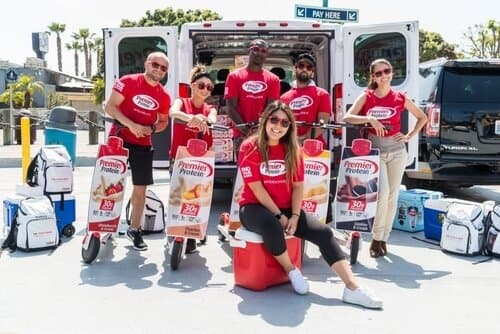
Food truck tours combine the sensory power of product sampling with the reach of a multi-city mobile activation. A branded food truck rolling through Los Angeles, Phoenix, Denver, Dallas, and Atlanta over the course of six weeks can generate tens of thousands of direct consumer interactions, millions of social media impressions, and measurable sales lift in each market.
But the staffing logistics for a mobile food truck tour are significantly more complex than a single-location event. You need reliable, adaptable staff in every city on your route, food safety compliance across multiple jurisdictions, and consistent brand execution from the first stop to the last.
Tour Staffing Models
Traveling Core Team Plus Local Market Staff
The most effective staffing model for food truck tours combines a small traveling core team of two to three people who ride with the truck through every market with local staff hired in each city for the activation days. The core team provides brand consistency, product expertise, and operational knowledge. Local staff provide additional hands, venue knowledge, and the ability to scale up or down based on each market's needs.
This model balances the cost of traveling staff with the reliability of people who know the brand inside and out. Your event staffing agency should source local talent in each market well in advance of the truck's arrival.
Fully Local Staff in Each Market
For budget-conscious tours or brands with straightforward sampling programs, hiring entirely local staff in each city eliminates travel costs. The trade-off is reduced brand consistency — each new team needs training from scratch, and there is no institutional knowledge carrying over between stops.
If you choose this model, invest heavily in pre-tour training. Video training modules, detailed brand briefs, and pre-shift check-in calls with the brand team help compensate for the lack of a traveling core.
Fully Traveling Team
Some tours keep the same team from start to finish, traveling with the truck through every city. This provides maximum brand consistency but comes with higher travel costs and the risk of staff fatigue over long tours. This model works best for short tours of three to five cities over one to two weeks.
City-by-City Staffing Logistics
Advance Booking
Book local staff in each market at least three weeks before the truck arrives. In competitive event markets like New York, Chicago, and Miami, four to six weeks of lead time is safer. Provide staff with the exact date, time, location, and a detailed briefing packet at the time of booking.
Food Safety Compliance
Every state and many municipalities have different food handler certification requirements. Staff preparing or serving food must hold valid certifications for the jurisdiction where they are working. Your product sampling agency should maintain a database of certification requirements by state and verify that all staff are compliant before each stop.
Permits and Regulations
Food truck operations require permits in most cities, and permit requirements vary dramatically. Some cities require advance permits weeks in advance, others allow same-day applications, and some neighborhoods prohibit food trucks entirely. Research permit requirements for every stop on your route before finalizing the schedule.
Managing a Mobile Tour Team
Daily Briefings
Start each activation day with a 15-minute team briefing covering the day's goals, local market context, schedule, weather considerations, and any adjustments from the previous stop. For local staff who are new to the activation, extend the briefing to 30 minutes to cover brand training.
Real-Time Communication
Maintain a group communication channel with all tour staff, the brand team, and the agency coordinator. Real-time communication is essential for handling schedule changes, weather delays, supply issues, and the inevitable surprises that come with mobile activations.
Consistent Reporting
Require the same reporting format at every stop — samples served, interactions logged, photos captured, social media mentions, and any notable feedback. Consistent data across markets allows you to compare performance and optimize future tours.
Food Truck Tour Budgeting
Staff costs for a food truck tour typically include hourly rates for local staff, day rates plus travel expenses for core team members, food handler certifications, and training time. Expect to budget 25 to 35 percent of your total tour costs for staffing, with the remainder covering truck rental, product, permits, fuel, and marketing materials.
Use our cost calculator to estimate staffing costs for your food truck tour across multiple cities.
Plan Your Food Truck Tour with Air Fresh Marketing
Air Fresh Marketing's experiential marketing agency team manages food truck tours from concept to completion. With local brand ambassador networks in every major US market, we handle staffing logistics across your entire route so you can focus on creating memorable brand experiences.
Our corporate event staffing capabilities extend to mobile marketing tours of any scale, from weekend pop-ups to six-month national campaigns.
Get a quote for your food truck tour, or contact us to discuss your mobile marketing strategy.