Brand ambassador ROI is the metric that separates experiential marketing budgets that grow from those that get cut. Every marketing leader knows that brand ambassadors create powerful in-person connections, but when the CFO asks for the numbers, "people really loved it" does not survive a budget review.
This guide provides the exact KPIs, measurement frameworks, and benchmarks you need to quantify the return on your brand ambassador investment. Whether you are running a single-market activation or a nationwide experiential campaign, these frameworks turn subjective experiences into boardroom-ready data.
Why Measuring Brand Ambassador ROI Is Challenging (and Essential)
Experiential marketing creates value across multiple dimensions simultaneously. A single brand ambassador interaction can generate a qualified lead, create a social media impression, shift brand perception, and drive a future purchase, all in a three-minute conversation.
Traditional marketing attribution models struggle to capture this multi-dimensional value. That is why many marketers default to vanity metrics like "total impressions" or "samples distributed" that fail to connect event performance to business outcomes.
The solution is a layered measurement framework that captures value at every stage of the customer journey.
The Brand Ambassador ROI Framework
Organize your measurement around four value layers, each building on the previous one:
Layer 1: Activity Metrics (What Happened)
Activity metrics establish the baseline of what your brand ambassadors accomplished. These are necessary but insufficient on their own.
Key activity metrics:
- Total interactions/engagements
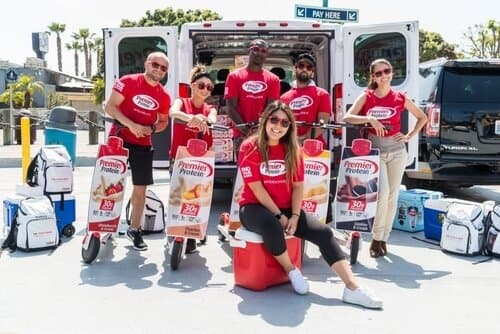
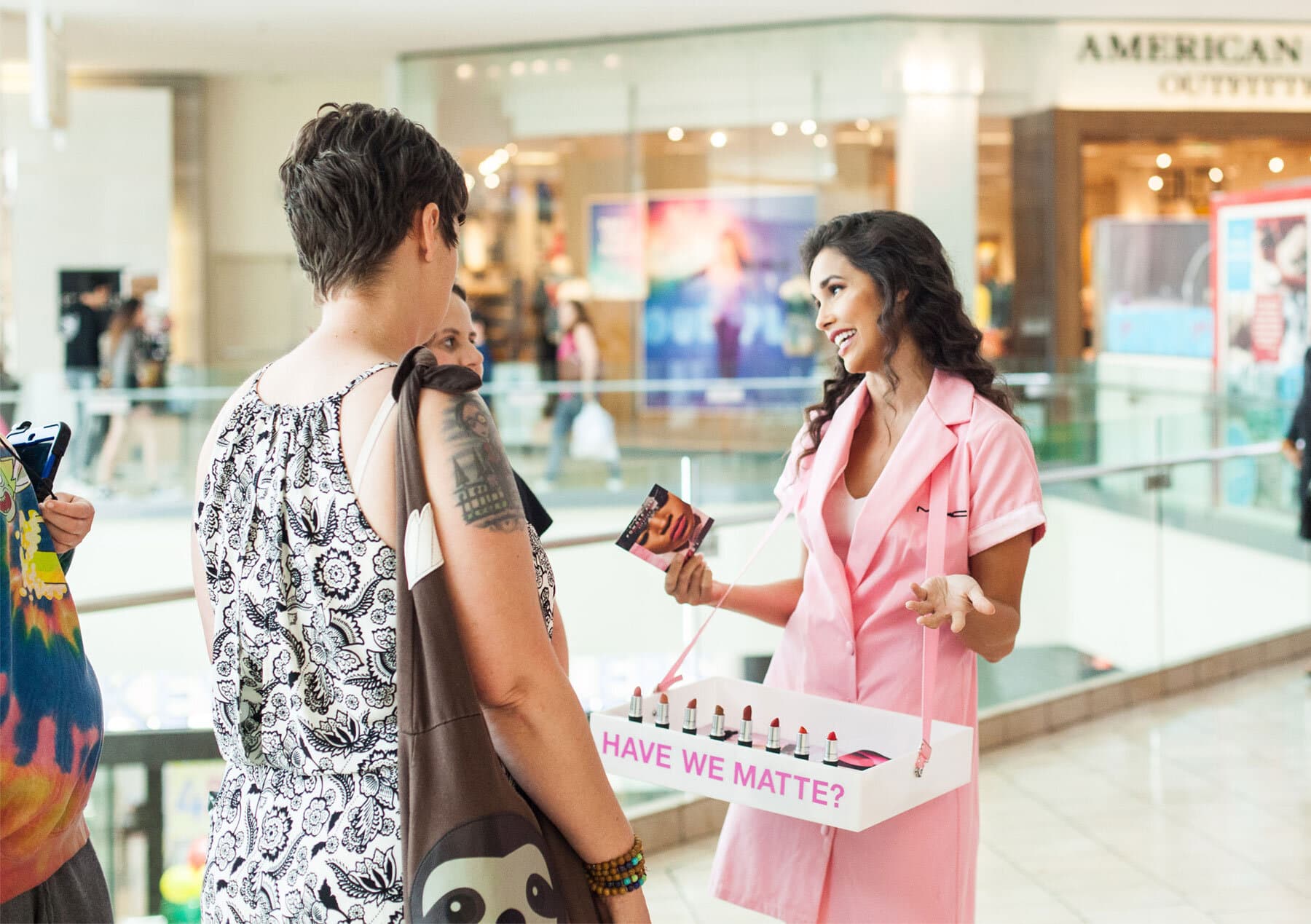
- Samples distributed
- Demonstrations completed
- Event hours staffed
- Geographic coverage (number of markets activated)
- Content pieces created (photos, videos, social posts)
Benchmark: A well-trained brand ambassador should complete 15-25 meaningful interactions per hour at a sampling event and 8-12 per hour at a trade show or complex product demonstration.
Layer 2: Engagement Metrics (How They Responded)
Engagement metrics measure the quality and depth of consumer interactions beyond simple headcounts.
Key engagement metrics:
- Average interaction duration (longer = more engaged)
- Opt-in rate for follow-up communications
- Social media shares and user-generated content
- Survey completion rates
- Product questions asked (indicates genuine interest)
- Email/phone capture rate
Benchmark: Professional brand ambassador programs achieve 25-40% opt-in rates for follow-up communications compared to 5-10% for passive marketing channels.
Layer 3: Conversion Metrics (What They Did Next)
Conversion metrics connect event interactions to measurable business actions. This is where ROI starts to crystallize.
Key conversion metrics:
- Leads generated (total and qualified)
- Lead-to-opportunity conversion rate
- Website visits from event-specific URLs or QR codes
- Coupon/promo code redemptions
- App downloads or account sign-ups
- Direct sales at point of activation
Benchmark: Professional experiential marketing campaigns achieve 10-20% lead-to-opportunity conversion rates when leads are properly qualified during the event and followed up within 48 hours.
Layer 4: Business Impact Metrics (What It Was Worth)
Business impact metrics translate campaign activity into financial outcomes that justify your investment.
Key business impact metrics:
- Customer acquisition cost (CAC) from events vs other channels
- Revenue attributed to event-generated leads
- Customer lifetime value (CLV) of event-acquired customers
- Brand awareness lift (pre/post survey)
- Net Promoter Score impact
- Market share movement in activated markets
Benchmark: Brands that invest in professional experiential marketing report customer acquisition costs 30-50% lower than digital-only channels for high-consideration products.
How to Calculate Brand Ambassador ROI
The fundamental ROI formula applies:
ROI = (Revenue Generated - Total Campaign Cost) / Total Campaign Cost x 100
Calculating Total Campaign Cost
Include every expense associated with your brand ambassador program:
- Staff hourly rates (including training time)
- Agency management fees
- Materials and collateral
- Samples or product costs
- Travel and logistics
- Technology and data collection tools
- Post-event analysis and reporting
Attributing Revenue
Revenue attribution is the most complex part of the equation. Use these methods to connect event interactions to revenue:
Direct attribution: Track coupon codes, unique URLs, and promo codes distributed at events. This captures immediate conversions.
Assisted attribution: Use UTM parameters, landing pages, and CRM tagging to track leads that convert through subsequent touchpoints like email nurture sequences.
Lift analysis: Compare sales performance in activated markets versus control markets during and after your campaign period. This captures both direct and indirect impact.
Survey attribution: Ask converting customers how they first heard about your brand. Include event-specific response options to capture awareness-driven conversions.
Example ROI Calculation
A CPG brand activates a product sampling campaign across five markets:
- Campaign cost: $45,000 (staff, samples, management, travel)
- Samples distributed: 25,000
- Trial-to-purchase conversion rate: 12%
- Average customer first-year value: $48
- Customers acquired: 3,000
- First-year revenue: $144,000
ROI = ($144,000 - $45,000) / $45,000 x 100 = 220%
This 220% first-year ROI does not even account for repeat purchases, word-of-mouth referrals, or brand awareness lift, all of which add significant long-term value.
Setting Up Your Measurement Infrastructure
Accurate ROI measurement requires planning before your campaign launches, not after it ends.
Pre-Campaign Setup
Define success metrics before activation. Decide which KPIs matter most for your specific objectives and ensure your measurement tools are in place before staff hit the field.
Create tracking mechanisms. Set up unique URLs, promo codes, QR codes, and landing pages specific to your event campaign. Configure your CRM to accept and tag event-generated leads.
Establish baselines. Measure brand awareness, purchase intent, and sales velocity in target markets before your campaign begins. Without baselines, you cannot quantify lift.
During-Campaign Data Collection
Work with your event staffing agency to ensure real-time data capture:
- Digital lead capture forms (not paper)
- Interaction counting with quality ratings
- Photo/video documentation
- Social media monitoring for event mentions
- Inventory tracking for samples and materials
Post-Campaign Analysis
Immediate (within 48 hours): Activity and engagement metrics summary, lead quality assessment, and field team debrief notes.
Short-term (2-4 weeks): Lead conversion tracking, promo code redemption rates, website traffic analysis, and social media impact assessment.
Long-term (3-6 months): Customer acquisition analysis, lifetime value projections, market share impact, and comprehensive ROI calculation.
Common ROI Measurement Mistakes
Mistake 1: Measuring Only Impressions
"We reached 50,000 people" sounds impressive but means nothing if those impressions did not drive engagement or conversion. Always pair reach metrics with depth metrics.
Mistake 2: Ignoring Long-Tail Value
Many experiential marketing conversions happen weeks or months after the initial interaction. If you only measure same-day results, you are dramatically undervaluing your campaign. Extend your measurement window to at least 90 days.
Mistake 3: Comparing to Digital CPMs
Event marketing and digital advertising serve different functions. Comparing experiential CPMs to display ad CPMs ignores the quality differential. A three-minute face-to-face conversation with a brand ambassador creates fundamentally different value than a banner ad impression.
Mistake 4: Not Investing in Measurement Tools
Skimping on data collection technology saves a few hundred dollars and costs you thousands in lost insights. Professional experiential marketing agencies include measurement infrastructure in their campaign delivery.
Benchmarks by Campaign Type
Product Sampling Campaigns
- Cost per sample distributed: $1.50-$3.00
- Sample-to-trial conversion: 35-50%
- Trial-to-purchase conversion: 8-15%
- Typical ROI range: 150-300%
Trade Show Lead Generation
- Cost per qualified lead: $25-$75 with professional lead generation staff
- Lead-to-opportunity rate: 15-25%
- Opportunity-to-close rate: 10-20%
- Typical ROI range: 200-500%
Brand Activation and Launch Events
- Cost per meaningful engagement: $5-$15
- Social sharing rate: 10-25% of engaged consumers
- Purchase intent lift: 15-30%
- Typical ROI range: 100-250%
How Air Fresh Marketing Maximizes Your ROI
At Air Fresh Marketing, ROI measurement is built into every campaign from day one. Our technology platform provides real-time dashboards, automated lead capture, and post-campaign analytics that give you the data you need to prove value and optimize performance.
Our professional brand ambassadors are trained in professional data collection techniques, ensuring clean and comprehensive information from every interaction. And our account management team works with you to establish measurement frameworks before your first event, so you are never left guessing about results.
Explore our case studies to see documented ROI from campaigns across industries. Then contact us to discuss how we can deliver measurable results for your brand.