The future of experiential marketing is being reshaped by three converging forces: artificial intelligence that enables unprecedented personalization at scale, sustainability requirements that are shifting from optional to mandatory, and consumer expectations that increasingly demand authentic, meaningful brand interactions over passive advertising exposure. Brands that adapt to these shifts will dominate consumer attention and loyalty. Those that cling to 2019-era playbooks will find their activations feeling dated, wasteful, and disconnected from the audiences they are trying to reach.
As an experiential marketing agency that has executed thousands of brand activations, Air Fresh Marketing is investing in these trends now because the brands that move first will capture competitive advantages that compound over time.
AI-Powered Personalization in Experiential Marketing
Real-Time Consumer Profiling
AI is enabling experiential activations to adapt in real time to individual consumers. Using a combination of opt-in data (registration information, social media profiles, purchase history) and behavioral signals (dwell patterns, product interactions, content engagement), AI systems can create dynamic consumer profiles that customize the activation experience on the fly.
Example: A consumer registers for a brand experience by scanning a QR code and answering three quick questions. AI instantly generates a personalized experience pathway: routing them to products that match their preferences, triggering relevant content on nearby screens, and briefing the brand ambassador on what to discuss before the consumer reaches the next touchpoint.
Predictive Staffing and Deployment
AI-driven analytics are transforming how agencies deploy event staff. Rather than staffing based on historical averages, predictive models analyze weather forecasts, event schedules, social media buzz, local events, and historical foot traffic data to forecast demand for each activation day and location.
This means the right number of staff (not too many, not too few) at every activation, every day. It reduces costs during low-traffic periods and prevents understaffing during surges.
Post-Event Intelligence
AI is revolutionizing post-event analysis. Natural language processing analyzes thousands of consumer feedback comments to identify sentiment themes. Computer vision analyzes event photos and videos to measure crowd density, engagement levels, and emotional responses. Machine learning models attribute sales lift to specific activation elements with unprecedented precision.
These AI-powered insights help brands optimize future activations based on data rather than intuition. Learn more about measuring experiential marketing success with modern tools and frameworks.
Sustainability in Experiential Marketing
The Sustainability Mandate
Sustainability is no longer a nice-to-have differentiator; it is a baseline expectation, especially among Gen Z and millennial consumers who represent the primary target for most experiential campaigns. A 2025 survey found that 78% of consumers ages 18-35 say they would have a more negative perception of a brand that produced excessive waste at an event.
Sustainable Activation Design
Leading brands are redesigning activations with sustainability at the core:
- Modular, reusable structures that deploy across multiple events rather than single-use builds
- Digital experiences that replace printed materials, reducing paper waste
- Local sourcing of materials, food, and supplies to reduce transportation emissions
- Waste-zero goals with composting, recycling, and packaging reduction
- Carbon offset programs for tour logistics and event travel
Sustainable Materials
The materials used in experiential activations are shifting:
- Recycled and recyclable signage and displays
- Compostable sampling cups, plates, and utensils
- Plant-based inks for printed materials
- Reclaimed wood and recycled metal for structural elements
- LED lighting (dramatically lower energy consumption than traditional event lighting)
Communicating Sustainability
Brands that invest in sustainable activations should communicate their efforts, not as greenwashing, but as genuine commitment. Transparency about specific sustainability practices (energy reduction percentages, waste diversion rates, carbon offset quantities) builds credibility.
Immersive Technology Trends
Augmented Reality (AR) Experiences
AR is becoming mainstream in experiential marketing as smartphone capabilities improve and consumer comfort with AR grows. Effective AR applications in experiential include:
- Product visualization: Consumers see how furniture looks in their home, how makeup looks on their face, or how a vehicle looks in their driveway
- Interactive packaging: Scanning a product with a phone unlocks games, content, or rewards
- Venue enhancement: AR layers digital content onto physical spaces, creating hybrid experiences
Mixed Reality (MR) and Spatial Computing
Apple Vision Pro, Meta Quest, and enterprise MR platforms are creating new possibilities for immersive brand experiences. While consumer adoption is still early, brands are deploying MR at events to create differentiated experiences:
- Virtual product customization
- Immersive brand storytelling
- Virtual factory or facility tours
- Interactive data visualization
AI-Generated Content
AI content generation tools enable real-time creation of personalized content at activations:
- Custom artwork generated from consumer inputs
- Personalized video messages featuring the consumer
- AI-powered photo effects and filters
- Dynamic content that adapts to event context and consumer demographics
The Evolution of Consumer Expectations
Authenticity Over Production Value
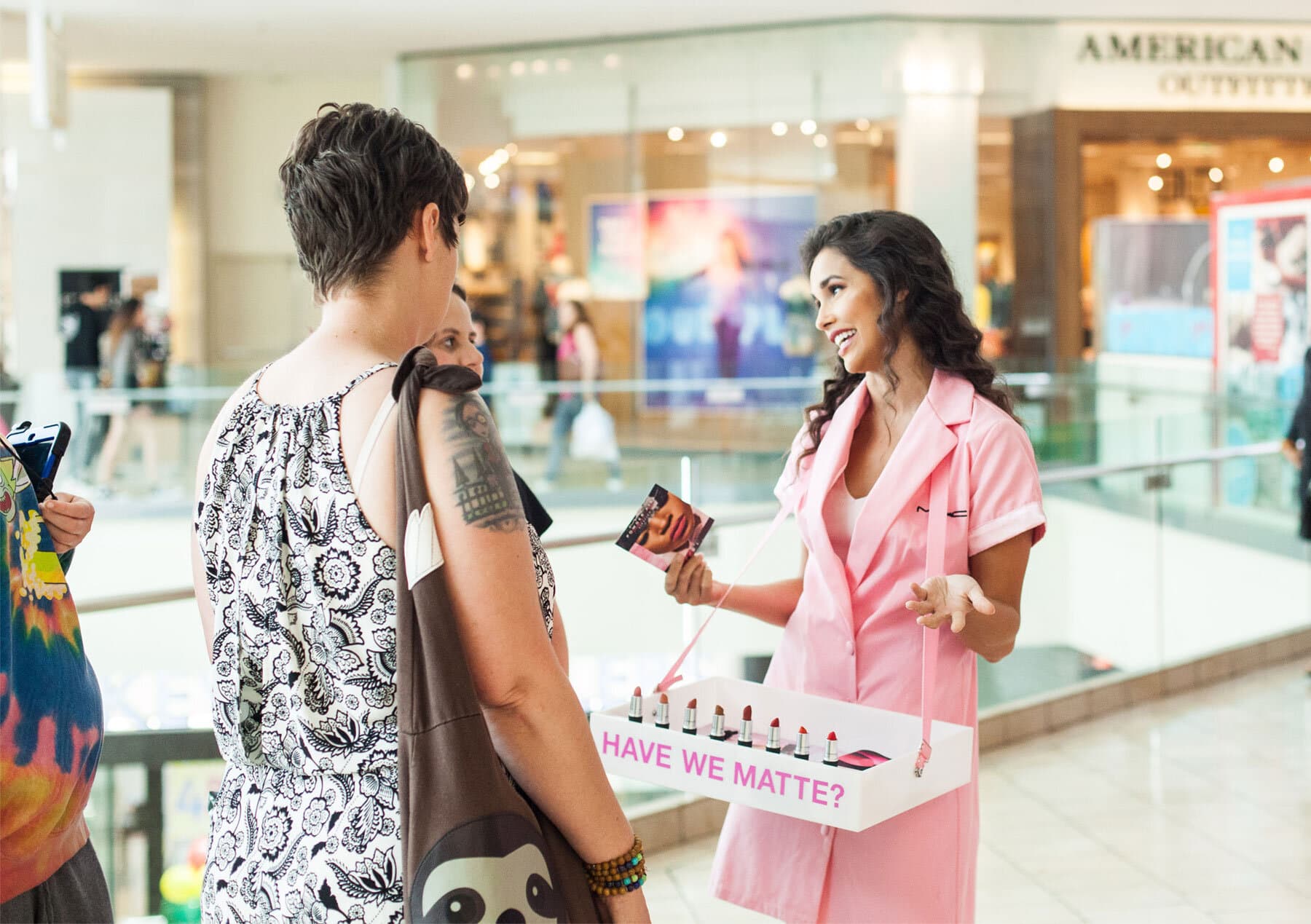
Consumers increasingly value authentic, genuine brand interactions over highly produced spectacles. This does not mean low-budget. It means real. Trained brand ambassadors who genuinely believe in the product and can have authentic conversations create more impact than elaborate set pieces with disengaged staff.
Value Exchange
Modern consumers expect something of genuine value in exchange for their attention and data. The best activations provide:
- Utility: A tool, resource, or service that solves a real problem
- Education: Knowledge or skills that improve the consumer's life
- Entertainment: An experience worth their time independent of the brand
- Product: A meaningful sample or gift, not cheap branded trinkets
- Connection: Community access or social experiences they could not create on their own
Community and Belonging
The most powerful experiential marketing in 2026 creates moments of genuine human connection. Brands that facilitate community (bringing people together around shared interests, causes, or experiences) generate loyalty that transcends transactional marketing.
Privacy-Respectful Engagement
Consumers are increasingly protective of their personal data. Future experiential marketing must balance personalization with privacy:
- Transparent data collection practices
- Clear opt-in/opt-out mechanisms
- Minimal data collection (only what is needed)
- Secure data handling and storage
- Compliance with evolving privacy regulations (GDPR, CCPA, state-level laws)
The Future of Event Staffing
Hybrid Human-AI Teams
Event staff will increasingly work alongside AI tools:
- AI-powered earpieces providing real-time product information and competitive responses
- Tablet apps that suggest personalized talking points based on consumer profiles
- Automated lead scoring that helps staff prioritize high-value prospects
- Real-time translation enabling cross-language consumer engagement
The human element (empathy, genuine connection, reading emotional cues, building trust) remains irreplaceable. AI enhances human capability rather than replacing it.
Specialized Skill Sets
As experiential activations become more technologically complex, event staff need broader skill sets:
- Technology fluency (troubleshooting AR/VR equipment, managing digital lead capture)
- Data literacy (understanding and acting on real-time metrics)
- Multilingual capability (serving diverse consumer populations)
- Content creation skills (capturing social media content during activations)
- Sustainability awareness (explaining brand sustainability practices credibly)
Continuous Development
The shift from transactional event staffing ("work this weekend") to ongoing brand representation programs means investing in continuous staff development. The brand ambassador programs guide explores how leading companies build long-term talent pipelines.
Preparing Your Brand for the Future
Audit Your Current Approach
Evaluate your current experiential marketing against the trends described here. Where are you leading? Where are you lagging? What capabilities do you need to build?
Pilot New Technologies
Do not wait for competitors to prove new technologies before testing them. Allocate 10-15% of your experiential budget to technology pilots (AR experiences, AI personalization, sustainable materials) that build capability and generate learnings.
Invest in Measurement
Future experiential marketing investment will be justified entirely by data. Build your measurement infrastructure now using the KPIs and metrics framework that connects activation metrics to business outcomes. Use our ROI calculator to model investment scenarios.
Partner for Capability
You do not need to build every capability in-house. Partnering with an experiential marketing agency that is investing in AI, sustainability, and emerging technology gives you access to expertise and infrastructure without the cost of internal development.
Get Future-Ready
Air Fresh Marketing is investing in the technologies, training, and sustainable practices that define the future of experiential marketing. From AI-enhanced brand activations and sustainable product sampling campaigns to tech-forward mobile marketing tours, we help brands stay ahead of consumer expectations.
Explore our portfolio of innovative activations, read case studies with measured results, or contact us to discuss how your brand can lead in experiential marketing's next chapter. Request a quote today.