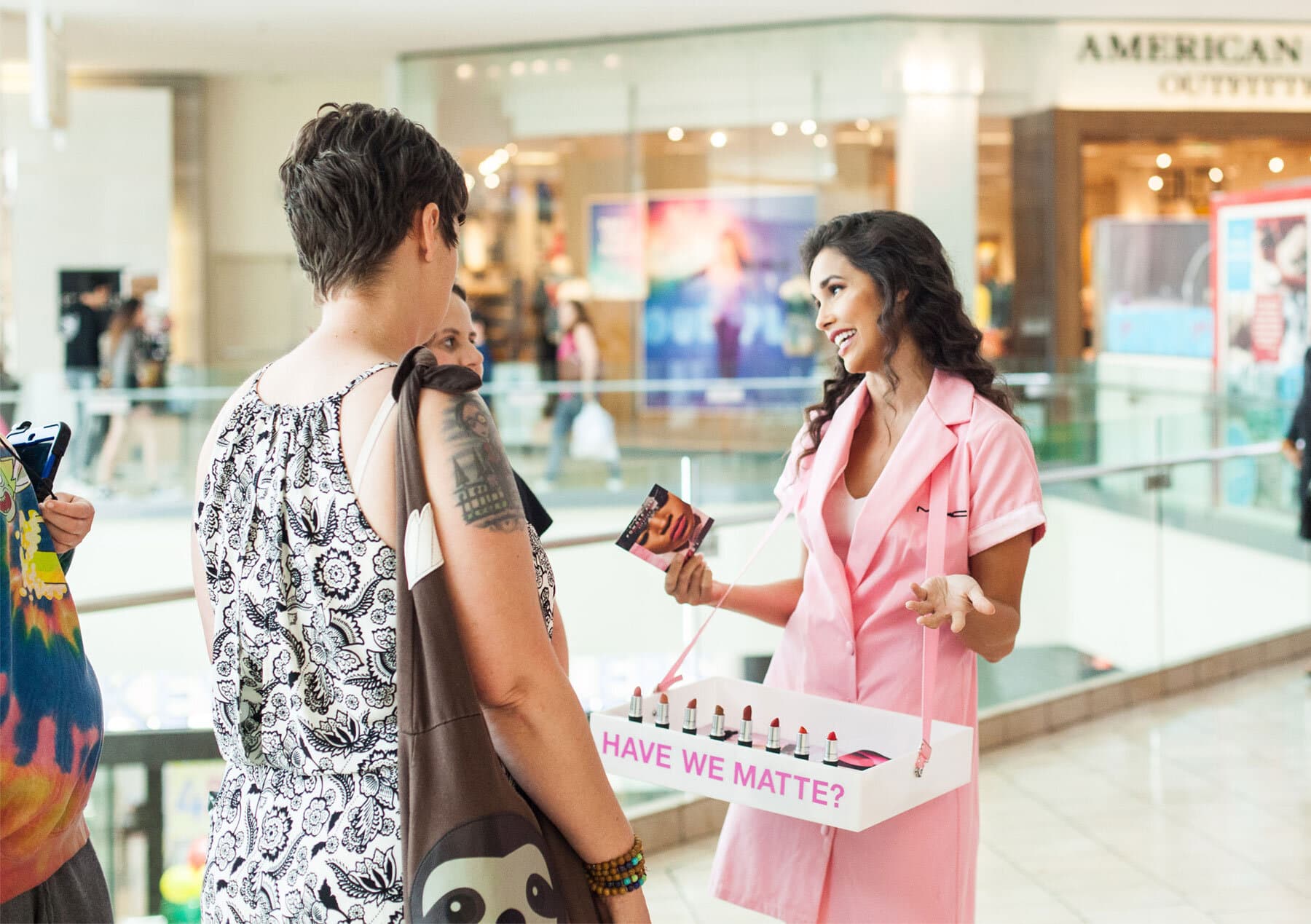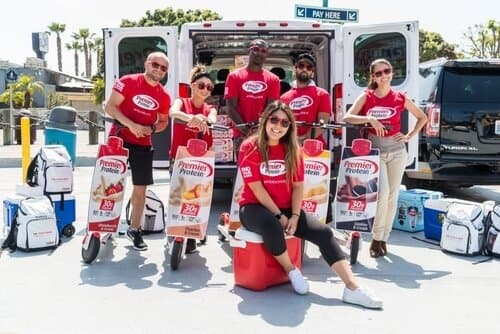
Experiential marketing is a marketing strategy that creates immersive, interactive brand experiences designed to engage consumers directly rather than delivering messages passively through traditional advertising channels. Also known as engagement marketing, experience marketing, or XM, experiential marketing invites consumers to participate in a branded experience that builds emotional connections, generates word-of-mouth, and drives measurable business outcomes. According to EventTrack research, 91% of consumers say they have more positive feelings about brands after attending experiential events.
At Air Fresh Marketing, we have designed and staffed thousands of experiential marketing campaigns across every major US market. This guide provides a comprehensive definition, 10 real-world examples, and data-backed benefits to help you understand why experiential marketing has become one of the fastest-growing segments of the marketing industry.
Experiential Marketing Definition
Experiential marketing differs from traditional marketing in one fundamental way: it prioritizes participation over observation. Instead of telling consumers about your product through ads, billboards, or social posts, experiential marketing lets them see, touch, taste, hear, and feel your brand in a memorable setting.
The core principle is simple. People remember experiences far more vividly than messages. Neuroscience research shows that experiences processed through multiple senses create stronger neural pathways and more durable memories than single-channel communications.
Key Characteristics of Experiential Marketing
- Interactive: Consumers actively participate rather than passively receive
- Sensory: Engages multiple senses (sight, sound, touch, taste, smell)
- Emotional: Creates feelings and associations that connect to the brand
- Shareable: Designed to generate organic social media content
- Measurable: Includes specific KPIs like engagement time, leads, and conversions
- Memorable: Creates lasting impressions that outlive the campaign
10 Experiential Marketing Examples That Work
1. Product Sampling Activations
Product sampling campaigns remain one of the most effective experiential formats. When consumers physically taste, test, or try a product, purchase intent increases by an average of 73% according to POPAI research. Air Fresh Marketing staffs sampling activations for CPG brands in grocery stores, festivals, sporting events, and high-traffic urban locations across 30+ cities.
2. Pop-Up Experiences
Temporary branded environments that appear in unexpected locations create urgency and exclusivity. Pop-ups range from single-day installations to month-long immersive spaces. They work particularly well in high-foot-traffic areas of New York, Los Angeles, and Chicago.
3. Trade Show Activations
Trade show staffing combines brand ambassadors, interactive displays, product demos, and lead capture technology to create memorable booth experiences. The most successful trade show activations go beyond static displays to create micro-experiences within the booth environment.
4. Mobile Marketing Tours
Mobile marketing tours bring branded experiences directly to consumers across multiple markets. Branded vehicles, trailers, or custom-built mobile units travel to festivals, college campuses, retail locations, and community events, bringing the brand experience to where the audience already gathers.
5. Brand Activation Events
Brand activations are purpose-built events designed around a specific brand message or product launch. These range from intimate VIP experiences to large-scale public events. The key is creating an environment where every touchpoint reinforces the brand story.
6. Guerrilla Marketing Stunts
Guerrilla marketing uses surprise, creativity, and unconventional locations to create buzz-worthy brand moments. When executed well, guerrilla campaigns generate massive earned media coverage at a fraction of the cost of traditional advertising.
7. Festival and Concert Activations
Music festivals, food festivals, and cultural events attract large, engaged audiences who are already in an experience mindset. Brands that create compelling festival activations tap into that energy and associate themselves with positive emotions. Air Fresh Marketing staffs activations at events like SXSW, Coachella, and Lollapalooza.
8. Interactive Technology Experiences
AR, VR, touchscreens, gamification, and AI-powered experiences create high-engagement activations that generate long dwell times and substantial social sharing. Technology-driven experiential works particularly well for B2B audiences and tech-forward consumer brands.
9. Cause-Related Experiential
Brands that connect experiential activations to social causes or community benefits create deeper emotional resonance. These campaigns combine brand messaging with meaningful impact, generating both awareness and goodwill.
10. In-Store Experience Design
Transforming retail environments into experience destinations blurs the line between shopping and entertainment. In-store experiential ranges from product demo stations to fully immersive brand worlds within the retail footprint.
5 Benefits of Experiential Marketing (With Data)
1. Higher Engagement and Recall
According to Freeman Global Brand Experience Study, 77% of marketers use experiential marketing as a core part of their brand strategy, and campaigns consistently deliver engagement rates 5-10x higher than digital advertising. Consumers who participate in brand experiences remember the brand 4x longer than those exposed to traditional ads.
2. Stronger Emotional Connections
Harvard Business Review research shows that emotionally connected customers have a 306% higher lifetime value. Experiential marketing creates emotional connections through direct human interaction, something digital channels cannot replicate at the same depth.
3. Organic Social Amplification
EventTrack data shows that 98% of consumers create digital or social content at experiential events, and 100% of those share it. A single in-person activation can generate thousands of social impressions through attendee sharing, effectively multiplying your marketing investment.
4. Qualified Lead Generation
Experiential marketing generates higher-quality leads because consumers self-select into the experience. People who spend 5-10 minutes engaging with your brand at an event are significantly more purchase-ready than those who briefly see a digital ad. Our lead generation staffing programs focus specifically on converting event interactions into qualified pipeline.
5. Measurable ROI
Modern experiential marketing is highly measurable. Between RFID tracking, lead capture technology, social listening, sales lift analysis, and post-event surveys, brands can calculate precise ROI. According to EventTrack, brands report an average of $5.82 in sales for every $1 spent on experiential marketing.
Experiential Marketing vs. Traditional Marketing
| Factor | Experiential Marketing | Traditional Marketing |
|---|---|---|
| Consumer role | Active participant | Passive viewer |
| Engagement depth | High (minutes) | Low (seconds) |
| Emotional impact | Strong (multi-sensory) | Moderate (visual/audio) |
| Shareability | Very high (98% share) | Low (organic) |
| Cost per impression | Higher | Lower |
| Cost per conversion | Often lower | Varies |
| Brand recall | 4x stronger | Standard |
| Lead quality | Higher | Variable |
How to Get Started With Experiential Marketing
Launching an experiential marketing campaign requires three core elements: a compelling creative concept, professional execution staff, and a measurement framework.
Step 1: Define Your Objectives
What do you want the experience to achieve? Common goals include product trial, lead generation, brand awareness, social amplification, and direct sales. Clear objectives drive every subsequent decision.
Step 2: Know Your Audience
The most effective experiential campaigns are designed around specific audience insights. Where do your target consumers gather? What experiences would they find valuable, entertaining, or shareable?
Step 3: Design the Experience
Create an experience concept that connects your brand story to your audience's interests and values. The best experiential concepts are simple to understand, easy to participate in, and inherently shareable.
Step 4: Staff It Professionally
Your brand ambassadors and event staff are the experience. They set the tone, guide interactions, capture leads, and represent your brand in every conversation. Partnering with a professional experiential marketing agency ensures your staff matches your brand standards.
Step 5: Measure Everything
Set up tracking systems before the event, not after. Define KPIs, implement lead capture technology, plan post-event surveys, and establish a baseline for sales lift analysis.
Work With an Experiential Marketing Agency
Planning and executing experiential marketing campaigns at scale requires specialized expertise in creative development, talent management, logistics, and measurement. Air Fresh Marketing provides end-to-end experiential marketing services including concept development, brand ambassador staffing, on-site management, and post-campaign analytics.
We operate in Denver, Las Vegas, San Francisco, Dallas, Atlanta, and 25+ additional markets nationwide. Explore our portfolio of experiential campaigns, review how we compare to other agencies, or request a quote for your next activation.
Experiential marketing is not a trend. It is a fundamental shift in how brands build relationships with consumers. Contact Air Fresh Marketing to discuss how immersive brand experiences can drive your business forward.